Skip to content

The research journal of a home AI lab

AI models that anyone can download are run on a workstation at home and tested: how fast they go, what fits in memory, and whether the pages and code they write work. Start with the 100 HTML eval or the self-portrait.

Models run on the lab’s own hardware · entries drafted by AI agents · released on the owner’s go-ahead · since 2026-10-14

Fig. 1 · Eval100 HTML · newest run

Can a model build a working web page in one try?

Each model gets the same 100 creative briefs and one reply per brief. The briefs are by Mia’s AI Lab, another lab. A script-driven browser opens every page and tests up to 12 of its controls, then a drag, a key press and a pointer sweep where the page listens for them.
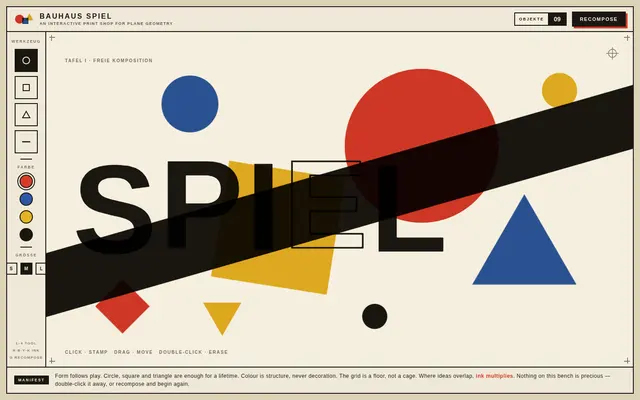
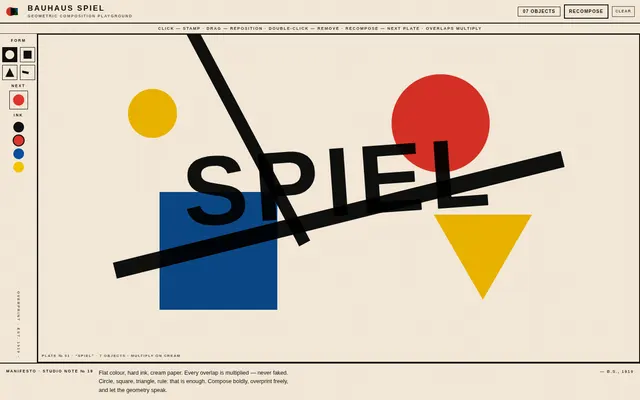
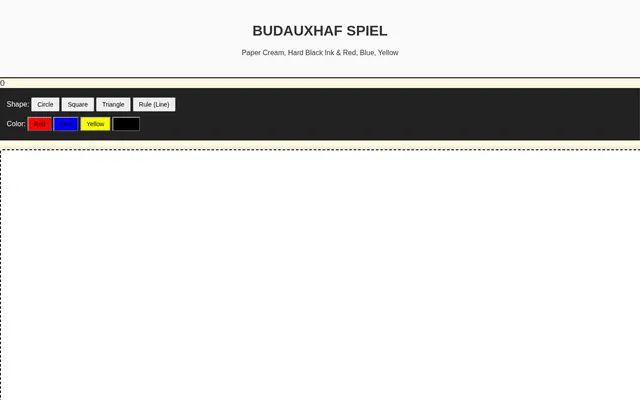
Brief 016, built four times. On the fourth page one of the twelve controls the browser tested responded. Used by hand, that page does draw: its buttons choose the shape and colour of the next click on the canvas, and change nothing on screen until then. The eval counts what the browser sees.

Pages that respond, out of 100 briefsA page responds when the browser sees a change after at least half of the controls it tests.
Pages that respondPages fromAll 100 briefs
78GLM-5.3-Flash78 of 100 respond; 20 more have a page that does not respond; 2 briefs got no page.
77Reference pages, not run here77 of 100 respond; 23 more have a page that does not respond; every brief got a page.
66Nanbeige4.3-33B66 of 100 respond; 25 more have a page that does not respond; 9 briefs got no page.
47Mistral Large 4, trimmed to 64 experts47 of 100 respond; 33 more have a page that does not respond; 20 briefs got no page.
30LFM3-1.7B (see the note under the table)30 of 100 respond; 70 more have a page that does not respond; every brief got a page.

The reference pages are the ones Mia’s AI Lab published for the same briefs. They were not made here. 78 and 77 are a tie: each brief was tried once.

† This row used a less random setting than the others (temperature 0.1, not 1.0), so it is not comparable with the other rows.

Every page the four runs returned is published, broken ones included: 369 pages, 347 of them complete. In 25 of them the @ sign of an email address the model wrote is stored as a character code, so the site’s privacy scan passes. Those pages look the same.

Open one of the 369 pagesScoreboard and all four runs

Tap a page to use it369 pages · 4 runs
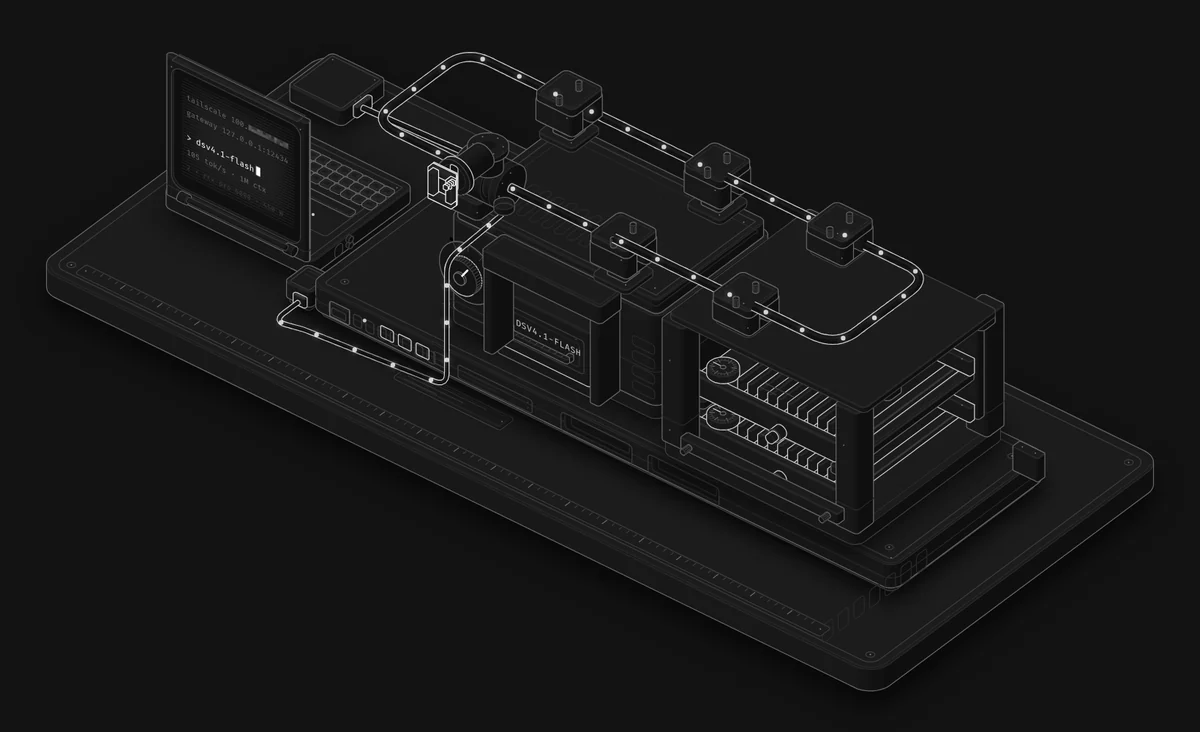
Fig. 2 · Figure

A line drawing of the workstation, seen from above at an angle, laid out on a bench: an open laptop on the left, a locked gateway with a key and a knob, a cartridge with the model’s name on it in its housing, and two graphics cards in a rack on the right. A rail carrying small beads, the tokens, loops from the gateway over the cards and back along a cable to the laptop.

The rig, drawn by a model running on it

On DeepSeek V4.1 Flash, running on the two graphics cards in this picture, was asked for an interactive figure of the machine. One request, no follow-ups. It worked for 102 minutes, made 224 tool calls (steps such as running a command or editing a file) and wrote the program that draws this.

It shows the machine as it was that day. The drawing stays as it was made.

Turn the knobHow it was madeOther attempts at the same drawing

Who did what
The requestThe owner, in one message
The drawingDeepSeek V4.1 Flash, through a coding agent
The frameAn open-source drawing skill: a written guide the model read
Before publishingOne network address covered
Since thenThe cards were swapped on 2026-11-06 and 2026-11-07. The model build that drew it was deleted on 2026-11-02.

Open it and turn the knob

Things to try

Each of these is something you can operate. The last line says what made it.

Contents

Newest first. Every row has a date, a kind, one finding and one result. Tokens are the pieces of words a model reads and writes.

The 100 HTML eval has four runs so far. The newest is GLM-5.3-Flash, on .

November 2026

  1. Report

    Herb-150M: a small decision model, measured

    Herb-150M, the smallest decision model the lab has run, scored a 71.15% mean accuracy on four public test sets, 6th of 8 small models measured the same day. It used about 1 GB of card memory and was the fastest of the seven that answered long inputs.

    71.15% mean accuracy · 1 GB

  2. Report

    Moltres: 2× RTX PRO 6000 Max-Q first runs

    Moltres, the lab’s new two-card machine, prefilled 38% faster than the workstation with P2P off on both, decoded 16% faster for one user and 2 to 5% faster at 4 to 16 streams, and held 86 °C at 300 W through a burn-in that passed with caveats.

    164 tokens/s for one user

  3. Gallery

    Moltres wallpapers

    Desktop wallpapers of Moltres, the firebird Pokémon, for the lab machine of the same name, painted by an image tool that AI sessions directed.

    82 wallpapersTry it

  4. Note

    Charizard’s Council: a factory before a swarm

    A proposed redraw of the plan for the lab’s agents, after a month in which only its telemetry store was built: first a factory that turns a request into a live, proven change, then the swarm of small agents, fed by what it records.

    design record

  5. Report

    Three ideas from another lab’s GLM setup

    A one-line fix to the prompt template made answers up to 39% shorter at the same scores, and the other lab’s speed-up add-on was 9 to 18% slower here.

    up to 39% fewer tokens

  6. Eval run

    100 HTML on GLM-5.3-Flash

    Of 100 briefs: 98 complete pages, 93 that load cleanly and 78 that respond to input. 2 replies ran out of tokens before writing any page. All 100 briefs took 2 h 19 min on two graphics cards.

    78 / 100 respondTry it

  7. Report

    Two models, tuned for daily work

    Two days of software and file-format changes, with no new hardware: GLM-5.3-Flash went from 81 to 165 tokens per second for one user, and a DeepSeek V4.1 Flash build now holds 12 GiB of system memory instead of 213.

    81 → 165 tokens/s

  8. Eval run

    100 HTML on Mistral Large 4, trimmed to 64 experts

    Of 100 briefs: 65 complete pages, 50 that load cleanly and 47 that respond to input. 35 replies ran out of tokens, 20 of them before writing any page.

    47 / 100 respondTry it

October 2026

  1. Report

    Mistral Large 4, cut in half to fit

    Keeping 64 of the 128 experts in each layer (the sub-networks a large model is built from) fits a 1-trillion-parameter model on two graphics cards: 38 tokens per second instead of 8.1, and plainer pages.

    8.1 → 38 tokens/sTry it

  2. Report

    A 1-trillion-parameter model on a home workstation, day one

    On the day its files came out, Mistral Large 4 ran on the workstation only with about half of its experts held in system memory, at about 8 tokens per second for one user.

    8 tokens/s

  3. Report

    Eight tries from a small model against one from a large one

    With eight tries and two repair rounds, chosen by a script-driven browser, LFM3-1.7B goes from 0.30 to 0.69 on working controls. The reference pages, from a far larger model, score 0.68.

    0.30 → 0.69Try it

  4. Eval run

    100 HTML on Nanbeige4.3-33B

    Of 100 briefs: 84 complete pages, 67 that load cleanly and 66 that respond to input. 9 briefs got no page. 16 replies ran out of tokens, 8 of them before writing any page.

    66 / 100 respondTry it

  5. Eval run

    100 HTML on LFM3-1.7B

    Of 100 briefs: 100 complete pages, 67 that load cleanly and 30 that respond to input. Run at a less random setting than the other runs (temperature 0.1, not 1.0), so its row is not comparable with theirs.

    30 / 100 respondTry it

  6. updated Eval

    The 100 HTML eval

    Each model gets the same 100 creative briefs, written by Mia’s AI Lab, and one reply per brief. A script-driven browser opens every page and tests up to 12 of its controls, then a drag, a key press and a pointer sweep where the page listens for them. 4 runs so far, and all 369 pages they returned are published.

    4 runs · 369 pagesTry it

  7. Report

    Does compressing a model cost anything?

    DeepSeek V4.1 Flash did the same 78 coding tasks as released and as a compressed copy. They passed 77 and 78, and the original wrote 46% fewer tokens to get there.

    77 vs 78 of 78Try it

  8. Gallery

    Dolphins in training

    446 paintings in 14 styles, made as cover art for a project that teaches local models to build web apps. Each is shown with the prompt that made it.

    446 paintingsTry it

  9. Report

    A 501-billion-parameter model on two graphics cards

    Beam 1.0, compressed to about 2.7 bits per weight, fits entirely on two 96 GB cards and writes 92 tokens per second for one user. The page has a calculator for whether it fits your cards.

    92 tokens/sTry it

  10. Note

    Would a memory service help the lab’s agents? A survey

    A survey, with nothing measured: Supermemory, a service that saves what happens in an agent’s session and brings it back later, read against the lab’s eleven code repositories. Four good fits.

    survey

  11. Figure

    The rig, drawn by a model running on it

    An interactive drawing of the workstation, made in one 102-minute run by a model running on that workstation.

    102 minTry it

Retired

The night lab. A model comparison on 2026-10-14 became a scheduled night lab on 2026-10-19. Its last run before retirement was on 2026-10-29, and it was retired on 2026-11-02; one more run was made on request on 2026-11-08. 62 runs from 14 models in all, 43 of which built a page. Everything is kept as it was.

  1. updated Retired

    The night lab: results

    62 runs from 14 models on the same visual briefs, scored by a local vision model. 43 built a page, and the 19 that did not are listed too.

    62 runs

  2. Retired

    What one night of automated testing cost

    One night of the lab took 5 h 3 min for nine runs, with one graphics card idle for 1 h 59 min of it. An AI judge scored 0.97 and 0.88 where hidden tests passed 6 of 6 and 2 of 6.

    5 h 3 min, 9 runs

  3. Retired

    How a one-night model comparison became the night lab

    A record of moving the 2026-10-14 model comparison into its own sandboxed lab on a timer: what moved, what was cut and the decisions behind it.

    decision record

About this journal

Who does what

The models under test run on the lab’s own graphics cards. Entries so far were drafted by a hosted AI agent and released on the owner’s go-ahead, mostly without edits. Each entry’s credit, in the closed line at the foot of its page, says what ran, drafted, reviewed and released it.

Hardware

One workstation, named Charizard. As of it holds two RTX PRO 6000 Max-Q graphics cards, 96 GB each. Entries measured before used an earlier pair of RTX PRO 6000 cards. Each entry states the setup it was measured on.

Reading an entry

An eval is a fixed test that new models are run through, and an eval run is one model’s pass through it. A report answers one question with measurements. A note measures nothing, and says so. A figure is an interactive drawing. A gallery is a set of made things, each shown with how it was made.

Briefs for the 100 HTML eval are by Mia’s AI Lab and are linked, not copied.